- The 3-Day Route at a Glance
- Arriving and Where to Stay
- Day 1: Hakata’s Old Streets and the Yatai
- Day 2: Dazaifu Tenmangu
- Day 3: Ohori Park, the Castle Ruins and the Seaside
- Fukuoka 3-Day Itinerary Costs by Travel Style
- Adjusting the Route
- Practical Tips
- Recommended Travel Insurance
- Recommended Tours & Activities
- A Practical Scenario: A Long Weekend From Seoul or Busan
- Frequently Asked Questions
- Final Thoughts on This Fukuoka 3-Day Itinerary
As an Amazon Associate, we earn from qualifying purchases linked in this post.
A Fukuoka 3-day itinerary is one of the easiest city trips in Japan to plan, because the airport is only two subway stops from Hakata Station and almost everything worth seeing sits within 15 minutes of the center. Spend one day on Hakata’s shrines and food stalls, one on Dazaifu and its famous shrine, and one on Ohori Park, the castle ruins and the seaside, and you will see the city without spending hours in transit.
Below is a day-by-day route with travel times between stops, a daily spending estimate, and the practical details, such as when the yatai food stalls open, that make the trip run smoothly.
The 3-Day Route at a Glance
This table shows how the Fukuoka 3-day itinerary fits together. Spending is per person for a mid-range traveler, excluding the hotel, at roughly 150 yen to the US dollar.
| Day | Route | Getting Around | Travel Time | Daily Spend (approx.) |
|---|---|---|---|---|
| Day 1 | Kushida Shrine → Kawabata shopping arcade → Canal City → Nakasu riverside yatai dinner | Walking | All stops 5–15 min on foot | ¥5,000–8,000 (US$35–55) |
| Day 2 | Dazaifu Tenmangu Shrine and Kyushu National Museum → back to Tenjin for shopping and dinner | Nishitetsu train or direct bus | Tenjin → Dazaifu about 30–40 min each way | ¥5,000–9,000 (US$35–60) |
| Day 3 | Ohori Park → Fukuoka Castle ruins → Momochi Seaside Park and Fukuoka Tower → Tenjin yatai | Subway, bus and walking | Tenjin → Ohori Park 5 min, Ohori Park → Fukuoka Tower 15–20 min by bus or taxi | ¥5,000–8,000 (US$35–55) |
Arriving and Where to Stay
Fukuoka Airport’s domestic terminal connects directly to the subway; Hakata Station is about 5 minutes away and Tenjin about 11 minutes. International flights arrive at a separate terminal, linked to the domestic side by a free shuttle bus of around 10 to 15 minutes.
For a three-day stay, choose between two areas. Hakata, around the main station, is best if you plan day trips by Shinkansen or want quick airport access. Tenjin is the shopping and dining hub, closer to Ohori Park and the busiest yatai. The two are only a few subway stops apart, so either works.
The Japan National Tourism Organization site lists seasonal events in Fukuoka, including the Hakata Gion Yamakasa festival in July. Before you book, check Japan’s entry rules, and compare costs with how much a week in Japan costs.
Day 1: Hakata’s Old Streets and the Yatai
Morning
Start at Kushida Shrine, Hakata’s main shrine and the home of the Yamakasa festival. One of the decorated festival floats is often on display inside the grounds. From there, walk through the covered Kawabata shopping arcade, one of the oldest shopping streets in the city.
Afternoon
Continue to Canal City Hakata, a large shopping complex built around an artificial canal, with fountain shows and Ramen Stadium on the upper floor if you want to compare regional ramen styles. Hakata is famous for tonkotsu ramen, a rich pork-bone broth with thin noodles, and many shops let you order a kaedama, an extra portion of noodles, for your leftover soup.
Evening
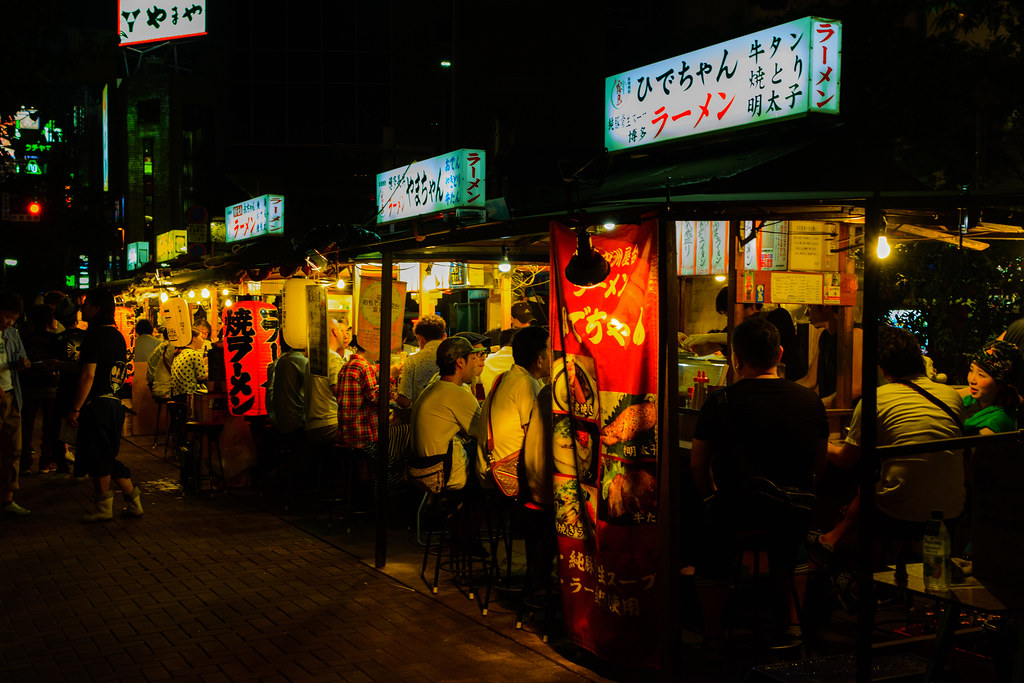
Fukuoka’s yatai are small open-air food stalls with a counter and a handful of stools. They usually open around 18:00 and close after midnight, and the riverside stalls in Nakasu are the most atmospheric. Expect to share space with strangers, order one or two dishes and a drink at each stall, and move on; prices are often posted, but ask if not. Some stalls close on rainy or stormy nights.
Day 2: Dazaifu Tenmangu
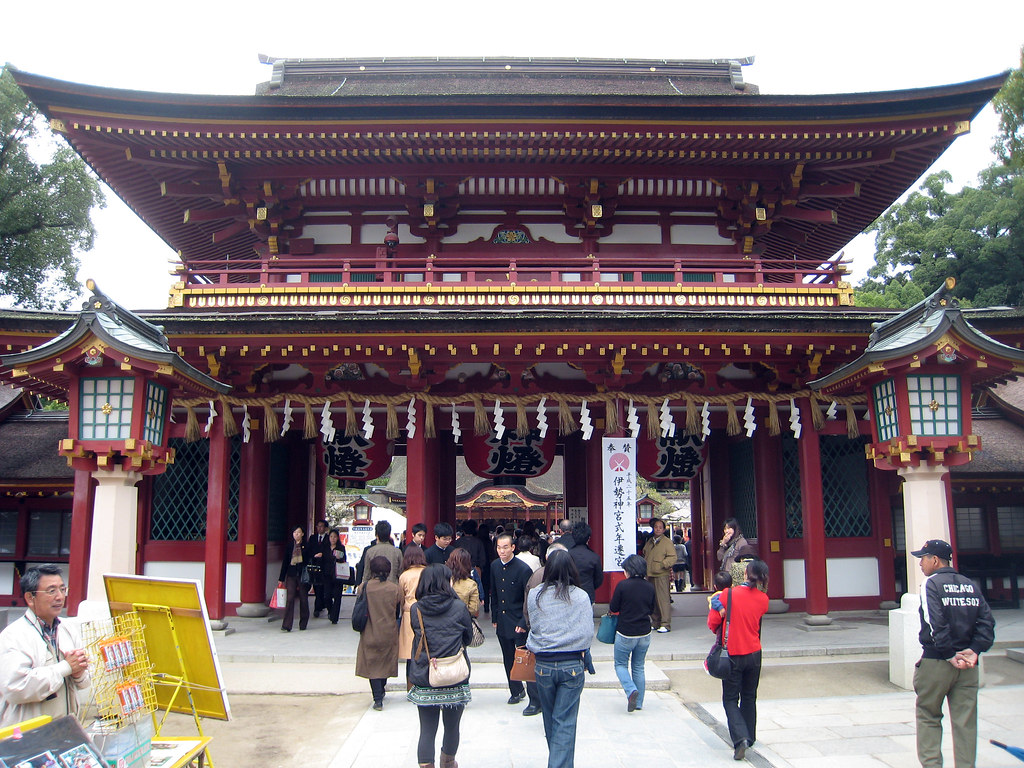
Dazaifu is a small town southeast of the city, home to Dazaifu Tenmangu, a shrine dedicated to the god of learning and visited by students before exams. From Nishitetsu Fukuoka (Tenjin) Station, take the Nishitetsu train and change at Futsukaichi for Dazaifu; the trip takes about 30 to 40 minutes. There is also a direct bus from Hakata Station of around 40 minutes.
Walk up the approach street lined with shops selling umegae mochi, a grilled rice cake filled with sweet bean paste, and visit the main hall, which has been under a multi-year restoration; during the works, prayers are held at a striking temporary hall with a small forest on its roof. Behind the shrine, a moving walkway and tunnel lead to the Kyushu National Museum, one of Japan’s four national museums, focused on the region’s long contact with the rest of Asia.
Return to Tenjin in the afternoon for shopping in the underground mall and department stores, and have dinner at a mizutaki restaurant, Fukuoka’s chicken hot pot.
Day 3: Ohori Park, the Castle Ruins and the Seaside
Morning
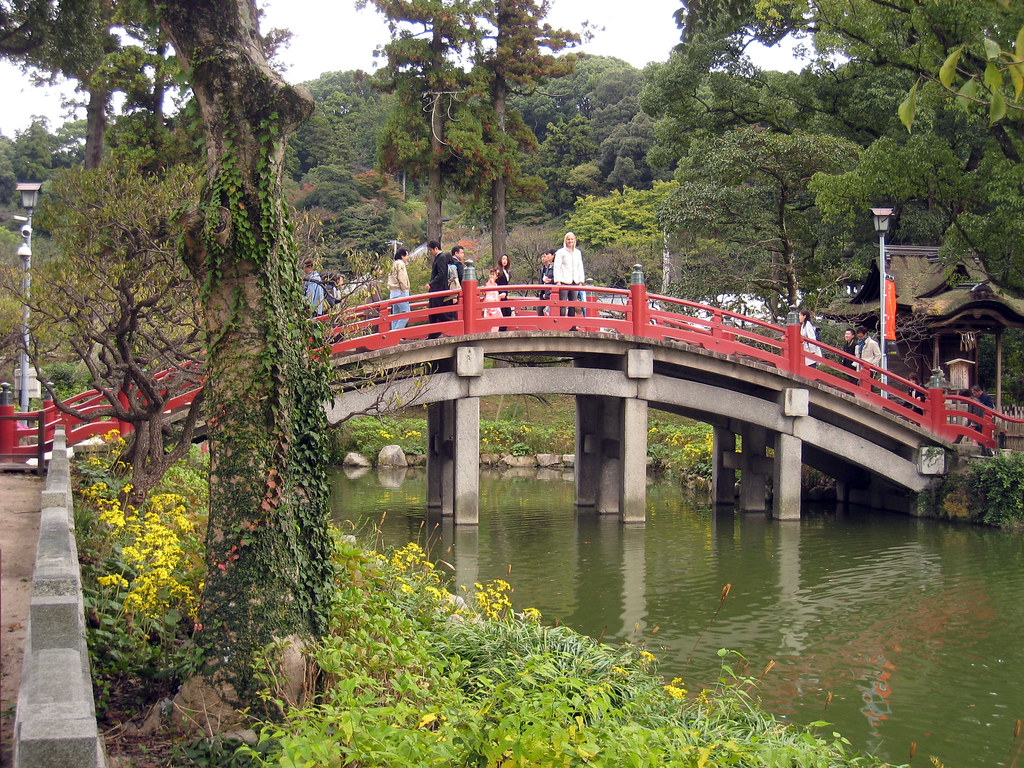
Take the subway to Ohori Park, a large park built around a lake with a walking path of about 2 km and a Japanese garden on the south side. Next door, the stone walls of Fukuoka Castle sit on a hill; climb to the top of the old keep base for views over the city. In late March and early April this is one of the city’s best cherry blossom spots.
Afternoon
Take a bus or taxi 15 to 20 minutes west to Momochi Seaside Park, an artificial beach with a boardwalk. Fukuoka Tower, at 234 meters, has an observation deck that is especially good at sunset.
Evening
Finish with a second round of yatai, this time in Tenjin, or try motsunabe, a beef offal hot pot that locals love in winter.
Fukuoka 3-Day Itinerary Costs by Travel Style
| Travel Style | Room per Night | Food per Day | Transport and Entry (3 Days) | 3-Day Total per Person |
|---|---|---|---|---|
| Budget | ¥4,000–7,000 (hostel or capsule) | ¥2,500–4,000 | ¥2,000–3,000 | About ¥22,000–36,000 (US$145–240) |
| Mid-range | ¥9,000–16,000 per room (business hotel) | ¥5,000–7,000 | ¥3,000–5,000 | About ¥32,000–50,000 (US$215–335) |
| Comfort | ¥25,000+ per room | ¥10,000+ | ¥6,000+ | ¥80,000+ (US$530+) |
Mid-range and comfort room prices assume two people sharing, divided per person.
Adjusting the Route
- Families: Add the Fukuoka City Science Museum or the aquarium at Uminonakamichi Seaside Park, about 40 minutes away.
- Couples: Add a half-day boat ride through the canals of Yanagawa, roughly 50 minutes from Tenjin by Nishitetsu train.
- Solo travelers: The yatai are ideal for meeting people; sit at the counter and ask the cook for a recommendation.
- Four or more days: Fukuoka is a gateway to Kyushu and western Honshu. Hiroshima is about an hour by Shinkansen; check whether a rail pass makes sense in our guide to whether the JR Pass is worth it.
Practical Tips
- IC cards: A rechargeable transport card works on Fukuoka’s subway, buses and Nishitetsu trains.
- Yatai etiquette: Keep visits short, do not bring outside food, and check whether the stall accepts cards; many are cash only.
- Weather: June brings the rainy season and July to September can be hot and humid, with occasional typhoons.
- Shrine manners: Bow at the gate, rinse your hands at the water basin, and avoid photographing people praying.
Recommended Travel Insurance
Medical care in Japan is excellent but can be expensive for visitors without cover. SafetyWing’s Nomad Insurance is one option that can be bought after you have left home and is billed in four-week periods. Read the policy wording to confirm what is covered.
Recommended Tours & Activities
Yatai food tours, Dazaifu half-day trips and Yanagawa boat rides can be compared and booked ahead on GetYourGuide, with free cancellation on many listings.
See Fukuoka tours and day trips →
Disclosure: this post contains affiliate links. If you book or sign up through them, we may earn a small commission at no extra cost to you.
A Practical Scenario: A Long Weekend From Seoul or Busan
Imagine a traveler flying from Seoul on a Friday morning and leaving on Sunday evening. They land before noon, drop bags at a Hakata hotel, and follow Day 1 from the afternoon. Saturday is Dazaifu in the morning and Ohori Park and the castle ruins after lunch. Sunday morning is Momochi and Fukuoka Tower, then a last bowl of ramen at the airport. The short airport transfer makes it possible to fit nearly the whole route into two and a half days.
Frequently Asked Questions
Is three days enough for Fukuoka?
Yes. Three days covers Hakata, Dazaifu, Ohori Park, the castle ruins, the seaside and two yatai evenings.
How do I get from Fukuoka Airport to the city?
Take the subway from the domestic terminal: about 5 minutes to Hakata and 11 minutes to Tenjin. International arrivals take a free shuttle bus to the domestic terminal first.
What time do Fukuoka yatai open?
Most open around 18:00 and stay open until late. Some close on bad-weather nights.
Is Dazaifu worth a half day?
Yes. The shrine, the approach street and the national museum fit comfortably into a morning or afternoon.
Final Thoughts on This Fukuoka 3-Day Itinerary
This Fukuoka 3-day itinerary keeps travel short and food central: Hakata’s shrines and ramen, Dazaifu’s shrine and museum, and Ohori Park with the seaside, with yatai evenings in between. Base yourself in Hakata or Tenjin, use an IC card, and leave room for one more bowl of tonkotsu ramen.

About the Author
RouteDays Team
RouteDays is an independent travel-planning site. We build day-by-day routes from official transit timetables, attraction websites and current price listings, use AI writing tools to help draft each guide, and review every guide before it goes live. We have not personally visited every city we cover, so travel times and prices are estimates: please confirm them with the official sources linked in each guide before you book. Spotted something out of date? Tell us through the Contact page.
🎒 Travel Gear We Recommend
Tried-and-tested essentials that make trips like this one smoother.
As an Amazon Associate we earn from qualifying purchases, at no extra cost to you.